2026 Trading Places Survey
Irish SMEs Balance Global Growth Opportunities with Growing Uncertainty
22 July 2026
International trade remains a critical driver of growth for Irish businesses. New research from Bibby Financial Services found that SMEs generate an average of €2.13 million in turnover from international trade, with 13 percent turning over more than €5 million, and export to an average of 12 international markets, highlighting the increasingly global nature of Irish business.
However, greater international reach also brings greater exposure to risk. As businesses trade across more markets, they are increasingly navigating geopolitical conflict, trade barriers, currency volatility and supply chain disruption, all of which are creating additional financial and operational pressures.
Recent geopolitical events are having tangible consequences for Irish SMEs. Our research found that 84 percent of Irish SMEs experienced disruption linked to the Iran conflict, with more than a quarter (27%) reporting significant disruption. Businesses estimate these disruptions have cost almost €60,000 on average, while 72 percent believe their business faces a moderate or significant risk of financial distress should instability continue.
Alongside geopolitical challenges, businesses are also managing day-to-day trading pressures, including supplier reliability, payment delays and increasing administrative complexity. The result is a business environment where growth opportunities remain strong, but resilience, adaptability and effective cashflow management are becoming increasingly important for long-term success.
Despite these challenges, Irish businesses remain firmly focused on growth. Many are actively pursuing diversification, exploring new markets and building new international partnerships. Success will increasingly depend not only on identifying opportunities, but also on having the financial resilience and flexibility to respond to a rapidly changing trading landscape.
Financial pressures continue to stack up
While geopolitical challenges are attracting media headlines, businesses are also contending with a growing number of financial pressures on their shores. Tariffs and trade barriers are cited as the leading challenge by 55 percent of Irish SMEs, whilst interest rates and inflation continue to affect profits and investment.
Foreign exchange volatility also creates another dimension of uncertainty for businesses. More than half of Irish businesses (56%) have experienced the impact of currency fluctuations, with an average financial cost of approximately €98,000. While businesses generally report confidence in their understanding of FX risk (82%), exposure remains significant.
These pressures combine in forming a business environment where financial risk is becoming increasingly multi-dimensional. Companies are managing not only economic uncertainty, but also geopolitical disruption, currency fluctuations and operational deficiencies simultaneously.
Cashflow now a critical concern
Among all challenges identified, cashflow pressure continues to stand out as the most immediate risk facing Irish businesses today. Nearly three-quarters (73%) of businesses report increased pressure on working capital, reflecting the mounting effect of uncertainty across the trading environment.
Delayed payments are the single biggest contributor to this pressure (55% businesses affected), highlighting the challenges businesses face when cash becomes tied up in outstanding invoices. At a time when SMEs need flexibility to navigate volatility and invest in their growth, payment delays can significantly restrict operational agility.
The data also shows that liquidity is becoming a defining issue for many businesses. With 80 percent reporting a moderate or significant risk of business distress, strong cashflow management is increasingly serving as the foundation upon which resilience and growth are built.
Margin pressures force SMEs to make difficult choices
Rising costs linked to tariffs, geopolitical tensions and wider trade disruption are creating difficult decisions for businesses. According to the data, 37 percent of businesses are choosing to both absorb the higher costs and pass some increases onto customers, while 29 percent are absorbing the costs entirely. Only 20 percent have been able to fully pass increased costs on to customers.
These decisions come as businesses cite interest rates as a major challenge (48%), as well as inflation (42%) and rising overseas business costs (37%). The findings suggest that rising costs are not occurring in isolation. For many businesses, cost increases are compounded by supply chain disruption, administrative complexity and slower payment cycles, creating a challenging environment for protecting margins.
If you have seen costs for goods or services rise in response to President Trump's tariffs/the war in Iran, how have you handled this?:
| Decision | Percentage of Businesses that took this decision |
|---|---|
| We have passed costs on to customers | 20% |
| We are absorbing higher costs | 29% |
| We are both absorbing higher costs and passing on some of this to customers | 37% |
| We are seeking to make cost savings in other areas of the business | 8% |
| N/A - We have not seen cost rises in response to President Trump's tariffs/the Iran war | 6% |
Growth remains the priority despite uncertainty
Despite the scale of the challenges facing businesses, the findings reveal a remarkably resilient outlook among Irish SMEs. More than half of businesses (56%) expect exports to increase in the coming months, even after a period in which many reported declining export activity (55%).
Businesses are responding proactively to uncertainty by diversifying markets, strengthening supply chains and building new commercial relationships. With Irish SMEs already exporting to an average of 12 international markets, many are continuing to broaden their international footprint rather than retrench. Almost two-thirds (64%) plan to establish new export partnerships, driven by both growth ambitions and a desire to reduce concentration risk.
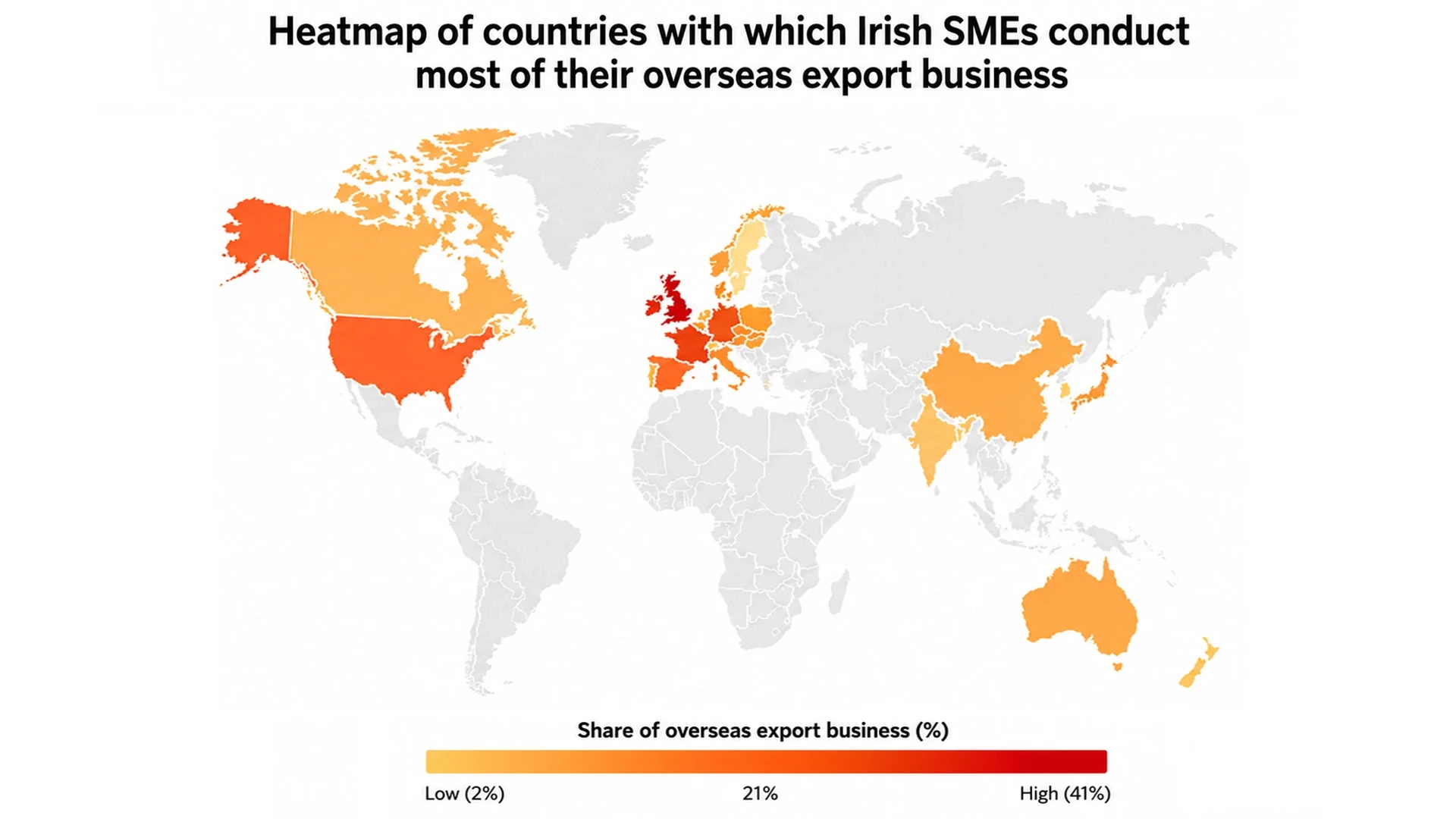
This optimism reflects the continued importance of international trade, particularly across key markets such as the US, France and Germany, while highlighting a growing desire among businesses to diversify and reduce reliance on any single market.
This growth optimism exists alongside an almost paradoxical degree of caution. Many businesses report unprecedented uncertainty (62%) and a reduced appetite for risk (64%), creating a new outlook where growth remains the objective, but resilience is becoming equally important.
Building resilience in a more uncertain world
The findings paint a picture of an Irish business community facing significant external pressures but remaining firmly focused on growth. Geopolitical disruption, foreign exchange volatility, rising trade costs and increasing cashflow pressures are creating a more challenging environment for businesses operating internationally.
At the same time, Irish businesses are not retreating from international trade. They are adapting through diversification, strengthening partnerships and pursuing new opportunities in overseas markets in Europe. The challenge is simply ensuring cashflow can keep pace with ambition.
As businesses navigate a more volatile trading landscape, access to working capital will play a vital role in supporting resilience and enabling growth. Bibby Financial Services has been providing funding to SMEs for over forty years. If your business is looking to unlock cash tied up in outstanding invoices, our Invoice Finance solutions can provide businesses with the flexibility to manage uncertainty whilst continuing to invest in future opportunities.